

If you have been watching Netflix’s “Mo” or scrolling through clips of it online, there is a good chance you have heard the phrase “shee foo” and paused to wonder what it actually means. It sounds casual, quick, and distinctly conversational, which is exactly why it caught on with viewers who do not speak Arabic.
This guide breaks down what shee foo really means, where it comes from, how it is used in everyday Palestinian Arabic, and why one specific scene from “Mo” turned it into a genuine talking point online.
What Does Shee Foo Mean?
Shee foo is a casual Levantine Arabic expression, most closely associated with Palestinian dialect, roughly meaning “what’s up,” “what’s going on,” or “what is it.” It functions as an everyday, informal check in, similar to how English speakers might say “what’s good” or “what’s the deal.”
Depending on tone and context, it can also lean toward “what’s that” when someone is pointing at or asking about a specific object or situation. The exact translation shifts slightly based on how it is said and what the conversation is actually about, which is common in spoken dialects that do not map perfectly onto single English phrases.
Breaking Down the Phrase: Shee + Foo
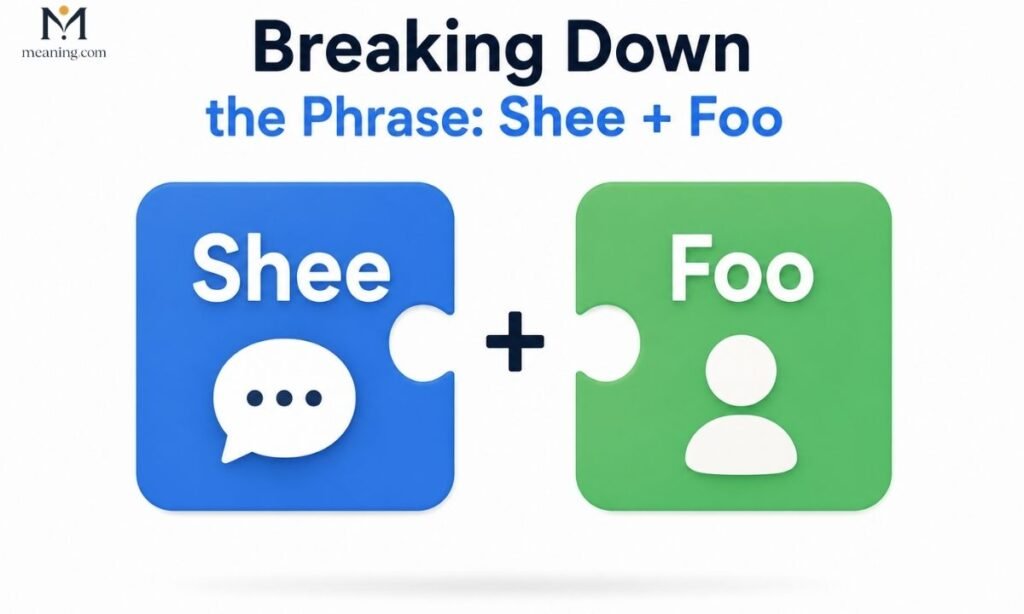
To understand shee foo, it helps to look at where each part likely comes from.
- Shee (often written as “shu” in transliteration) relates to the Arabic word for “what.”
- Foo (from “fi”) relates to a word expressing existence or presence, similar to “there is” or “is there.”
Put together, the phrase mirrors the common Levantine expression “shu fi,” which literally translates close to “what is there” and functions naturally as “what’s going on” in everyday speech. Spoken quickly and casually, “shu fi” can sound like “shee foo” to non native ears, which is part of why English speaking audiences transliterated it that way after hearing it on screen.
This kind of phonetic simplification is common whenever spoken dialect gets transcribed by ear rather than pulled from a formal dictionary.
Shee Foo in Palestinian Arabic: Cultural Context
Palestinian Arabic, like other Levantine dialects spoken across Palestine, Lebanon, Jordan, and Syria, relies heavily on short, rhythmic expressions for everyday interaction. Shee foo fits neatly into that pattern.
In daily life, the phrase might show up in situations such as:
- Greeting a friend casually on the street
- Checking in on someone during a phone call
- Asking what is happening in a group conversation
- Reacting with curiosity to something unexpected
It carries a warm, informal tone rather than a formal or distant one. You would not typically hear shee foo in a business meeting or written correspondence. It belongs to spoken, relational Arabic, the kind exchanged between family, friends, and neighbors.
How It Sounds: Pronunciation Guide
For English speakers trying to say it naturally, here is a simple breakdown:
| Part | Sounds Like | Notes |
| Shee | “she” held slightly longer | Soft, quick starting sound |
| Foo | Rhymes with “blue” or “moo” | Short, clipped ending |
Said together, the two sounds blend into one smooth phrase rather than two separate, sharply divided words. Native speakers say it quickly and casually, almost like a single conversational beat rather than a formal question.
Shee Foo in the Netflix Show “Mo”: The Pop Culture Connection
Much of the recent surge in searches for shee foo traces directly back to “Mo,” the Netflix series loosely based on the life of comedian Mo Amer. The show follows Mo Najjar, a Palestinian American navigating identity, family, and daily life in Houston, Texas, with a mix of humor and honesty.
What made the show stand out to many viewers is that it does not simplify its Arabic dialogue for an English speaking audience. Characters speak the way real Palestinian families actually speak at home, code switching naturally between Arabic and English the same way many Arab American households do in real life.
Shee foo appears in that dialogue exactly as it would in an everyday Palestinian conversation. It is not explained, defined, or subtitled with extra context. It simply gets used the way any native speaker would use it, which is part of what sparked so much curiosity from viewers unfamiliar with the phrase.
The Hameed Moment: Why It Became a Talking Point
One scene in particular helped push shee foo into wider online conversation. A comedic moment in the show involves a mix up connected to a character named Hameed, where a similar sounding phrase gets misheard or misunderstood, creating a lighthearted mistranslation joke.
That kind of scene works especially well for a mainstream audience because it highlights something native Arabic speakers already know: spoken dialect is flexible, playful, and often funnier than textbook language ever could be. Viewers who caught the moment took to social media and forums to ask what the phrase actually meant, which fueled a wave of search interest and online discussion.
Shee Foo in Online Slang and Social Media
After “Mo” gained popularity, shee foo quickly spread beyond the show itself. TikTok creators began using it in captions and audio clips, Instagram users referenced it in comments, and Reddit threads on communities like language learning and television forums filled up with people asking what it meant.
This pattern is fairly common whenever a streaming show introduces authentic, non English dialogue to a wide audience. A phrase that was once purely regional and conversational suddenly becomes a small internet moment, discussed and repeated far outside its original cultural context.
Common ways shee foo shows up online include:
- Captions referencing memorable scenes from “Mo”
- Comment threads asking for a translation
- Short clips or memes reusing the audio from the show
- Language learners using it as an entry point into Levantine Arabic
How and When to Use Shee Foo Correctly
If you want to use shee foo yourself, keep these guidelines in mind:
- Use it casually. It fits informal, friendly conversations, not formal writing or professional settings.
- Match the tone of curiosity or check ins. It works well as an opener, similar to asking “what’s going on” or “what’s up.”
- Expect regional variation. Pronunciation and exact phrasing can shift slightly depending on the specific dialect or country.
- Avoid using it as a literal dictionary translation. Spoken dialect rarely has one fixed, universal meaning, and context shapes it every time.
If you are learning Arabic and want to practice natural, spoken phrases rather than formal textbook Arabic, shee foo is a useful, low pressure phrase to start with.
Common Misconceptions About Shee Foo
A few misunderstandings tend to pop up whenever a phrase like this goes viral:
- Misconception: It is offensive slang. In reality, it is a neutral, everyday colloquial phrase with no negative or inappropriate meaning.
- Misconception: It has one exact translation. The meaning shifts slightly depending on tone and context, closer to “what’s up” in some situations and “what’s that” in others.
- Misconception: It is formal Arabic. It belongs firmly to spoken dialect, not standard or written Arabic.
- Misconception: It only appears in “Mo.” While the show popularized it for English speaking audiences, the phrase existed in everyday Palestinian speech long before the series.
Clearing up these points helps keep the phrase in its proper cultural context rather than turning it into an oversimplified internet trend.
Shee Foo and the Broader Value of Learning Arabic Colloquialisms
Phrases like shee foo highlight something important about language learning: textbooks alone rarely capture how people actually talk. Spoken dialects carry rhythm, regional flavor, and personality that formal grammar lessons often smooth over.
Watching authentic media, such as “Mo,” gives learners exposure to real conversational patterns, natural pacing, and the kind of casual phrasing that native speakers use without thinking twice. For anyone interested in connecting more genuinely with Arabic speaking friends, neighbors, or coworkers, learning a phrase like shee foo offers an easy, welcoming entry point into that everyday rhythm of speech.
Frequently Asked Questions
What does shee foo mean?
It generally means “what’s up” or “what’s going on,” rooted in the phrase “shu fi.”
Is shee foo offensive?
No, it is a neutral, everyday colloquial expression with no negative meaning.
Where does shee foo come from?
It comes from colloquial Levantine Arabic, especially Palestinian dialect.
Why did shee foo become popular?
It gained attention after appearing in Netflix’s “Mo,” especially around a memorable comedic scene.
Is shee foo formal Arabic?
No, it belongs to casual spoken dialect rather than formal or written Arabic.
Can shee foo mean different things depending on context?
Yes, it can lean toward “what’s up” or “what’s that” depending on the situation.
Is shee foo only used in the show “Mo”?
No, it is used naturally in everyday Palestinian conversation and simply became more visible through the show.
Is shee foo a good phrase for Arabic beginners to learn?
Yes, it offers an easy, natural introduction to casual spoken Levantine Arabic.
Conclusion
Shee foo is a casual Levantine Arabic phrase, closely tied to “shu fi,” that generally means “what’s up” or “what’s going on,” with some flexibility toward “what’s that” depending on context. Its recent popularity comes largely from Netflix’s “Mo,” a show praised for using authentic Palestinian Arabic dialogue rather than simplified language for a wider audience.
Understanding shee foo is really about more than a single trending phrase. It is a small window into how Palestinian Arabic sounds in real, everyday conversation, and a reminder that the most memorable parts of language often live outside the textbook entirely.
