


If you’ve come across the word “fein” while scrolling TikTok, chatting on WhatsApp, or listening to a new song, you’ve probably paused and wondered what it actually means. The word shows up in a surprising number of contexts — as slang, as a German word, and even as a common typo — and each version means something different. This guide breaks down every major meaning of “fein,” where it comes from, and how it’s actually used today.
Fein meaning in Urdu: There isn’t a native Urdu word “fein” — when the term shows up in Urdu-script chats or captions, it’s almost always the same internet slang described below, borrowed straight from English social media rather than translated. People typically explain it using the closest local equivalent to “craving” or “obsessed.”
Fein meaning song: The word got a huge visibility boost from “FE!N,” a 2024 track by Travis Scott featuring Playboi Carti. The song’s title leans on the “craving/obsession” sense of the word, which is part of why searches for its meaning spiked afterward.
Meaning & Definition of Fein
“Fein” isn’t a single, fixed word — its meaning depends heavily on the context it appears in. Broadly, it falls into three buckets.
1. Slang Meaning (Most Common Online)
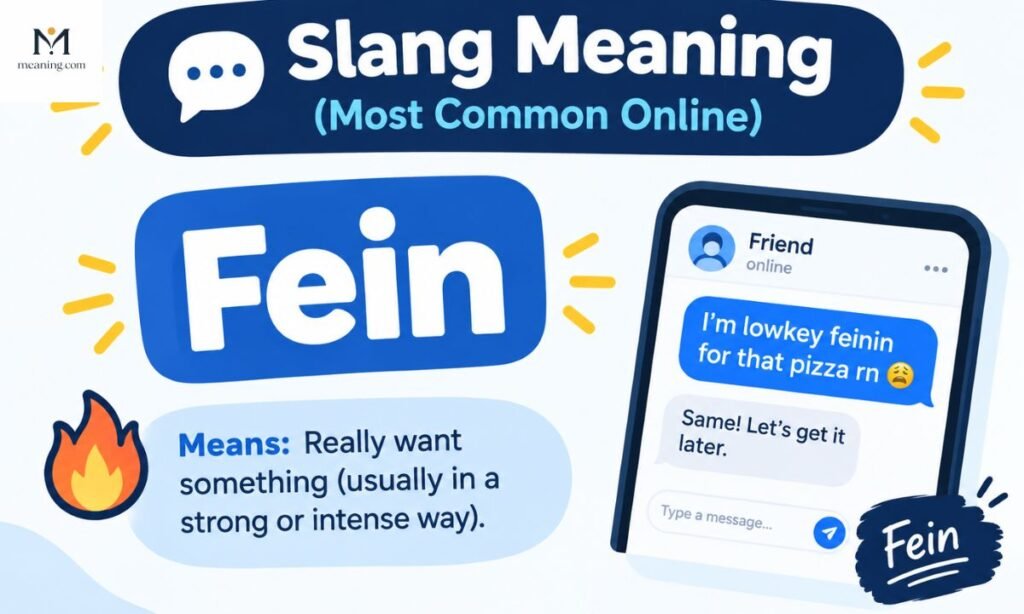
In modern internet slang, “fein” is a playful respelling of “fiend.” It describes craving, obsessing over, or being unable to get enough of something — often used lightly and humorously rather than literally. Someone might say they’re “feinin'” for coffee, a snack, a song, or even a person’s attention. The tone is usually exaggerated for comedic effect rather than meant to describe a genuine compulsion.
2. German Meaning
In German, “fein” is a standard adjective meaning fine, delicate, refined, or high-quality. It’s used the same way an English speaker might say “fine china” or “a fine detail” — describing something precise, elegant, or of good quality. This is the word’s oldest and most literal meaning, and it has no connection to craving or addiction.
3. Misspelling or Variation
Because English speakers often type phonetically, “fein” sometimes shows up as an accidental misspelling of “fine” (as in “I’m fein” instead of “I’m fine”) or of “feign” (to pretend). Context usually makes clear which one was intended, since “fine” and “feign” have completely unrelated meanings from the slang usage above.
Fein meaning vape: In vape and smoking-related slang, “fein” follows the same craving logic as its general slang use — someone who’s “feinin'” for a vape or a cigarette is describing a strong urge to use it, borrowing the same root idea as “fiend.”
Background & Origin of the Word “Fein”
The slang version of “fein” traces back to “fiend,” a much older word that originally meant a demon or evil spirit. Over the 20th century, “fiend” evolved in American English slang to describe someone with an intense craving or dependency — most notably in phrases describing drug addiction, like “dope fiend.” As social media culture embraced playful, phonetic respellings, “fiend” morphed into “fein” (and the related verb form “feinin'”), which felt more casual, meme-friendly, and easy to type. The German “fein,” meanwhile, developed on a completely separate linguistic track and simply means “fine” — the resemblance between the two is coincidental.
Usage in Different Contexts
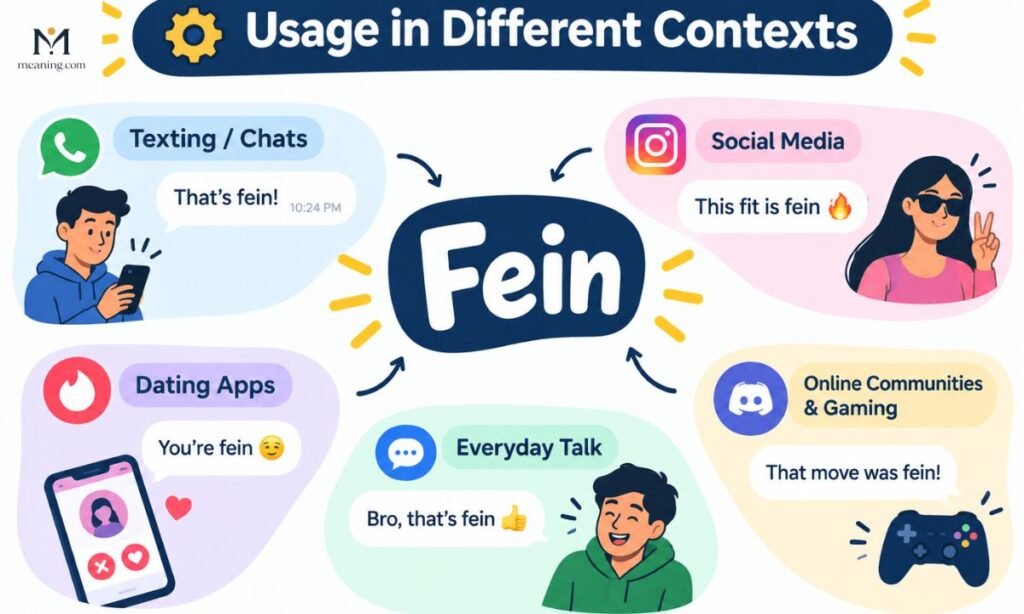
1. Casual Chat
In everyday texting, “fein” usually pops up as a lighthearted way to express a strong want: “I’m feinin’ for pizza right now” reads as casual, low-stakes craving talk rather than anything serious.
2. Social Media
On platforms like TikTok, Instagram, and Twitter/X, “fein” often appears in captions or comments to exaggerate enthusiasm about a trend, song, or product — part of a broader trend of internet slang stretching old words into new, meme-ready shapes.
3. Emotional Expression
Some usages lean toward describing emotional craving rather than physical craving — missing someone, wanting validation, or being unable to stop thinking about something. In this sense, “feinin'” for a person functions similarly to saying you’re “obsessed” with them.
4. Humorous Tone
A lot of “fein” usage online is intentionally over-the-top and funny — comparing a mild preference (like wanting a specific snack) to full-blown addiction is part of the joke, not a literal claim.
Meanings Across Platforms
The core slang meaning stays consistent across apps, but the tone shifts slightly depending on where it’s used.
Tends to be used in more personal, one-on-one conversations — often between friends joking about cravings, plans, or missing each other.
Frequently shows up in captions and comments, paired with humor or self-aware exaggeration (“me feinin’ for summer already”).
Snapchat
Used similarly to WhatsApp, but often shorter and paired with reaction-style responses in fast-moving chats.
Fein meaning TikTok: TikTok is arguably where the term picked up its biggest recent boost, both through trending audio and through the “FE!N” song, with commenters and creators using the word in captions to describe intense enjoyment or craving for a trend, product, or artist.
Other Fields Where “Fein” Appears
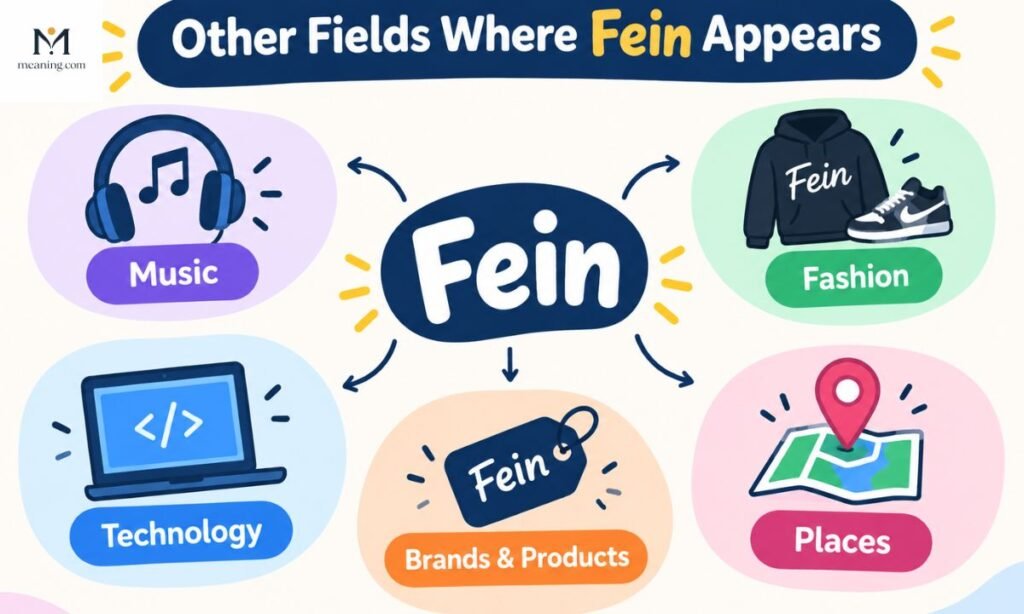
1. German Language
As noted above, “fein” is simply the everyday German adjective for “fine” or “delicate,” used constantly in ordinary German speech and writing — it has nothing to do with the English slang sense.
2. Industrial & Technical Field
“Fein” is also a well-known brand name in the power tool industry — the German company Fein, founded by Wilhelm Fein, is known for oscillating multi-tools and industrial equipment. Here, “Fein” functions purely as a proper noun/brand, unrelated to either the slang or the adjective.
3. Medical / Psychological Slang (Indirect Use)
Because the slang sense of “fein” is rooted in “fiend,” it sometimes surfaces in casual conversations about cravings or dependency-adjacent behavior — but it’s informal slang, not a clinical or diagnostic term.
4. Aircraft / Engineering (Rare Use)
Occasionally “FEIN” appears as an acronym or codename within niche technical or engineering documentation, though this usage is uncommon and highly context-specific rather than a widely recognized meaning.
Fein meaning Gen Z: For Gen Z specifically, “fein” is shorthand for an exaggerated, often funny craving — for food, a trend, a celebrity, or a vibe. It’s less about literal addiction and more about signaling enthusiasm in a self-aware, slightly ironic way.
Common Misconceptions & Mistakes
A lot of confusion around “fein” comes from mixing up its different forms.
Reality:
- “Fein” (slang) and “feign” (to pretend) are unrelated, despite sounding alike in some accents.
- “Fein” and “fine” are different words — one is slang for craving, the other just means “okay” or “good.”
- The German “fein” and the slang “fein” are historically unconnected, even though the slang version borrows the same spelling.
- Not every use of “fein” implies serious addiction — most online uses are exaggerated for humor.
Similar Terms & Alternatives
Words that overlap with or run alongside “fein” in casual usage include “fiend” (the original, more serious term for dependency), “simp” (obsessing over a crush specifically), “obsessed” (a more neutral, widely understood synonym), and “craving” (the plain-English version with no slang baggage).
How to Respond to “Fein” in Chat
1. Friendly Reply
Match the casual tone — something like agreeing that you’re craving the same thing, or asking what sparked it.
2. Playful Reply
Lean into the exaggeration — teasing the person about their “addiction” to whatever they mentioned.
3. Supportive Reply
If the craving is emotional (missing someone, wanting reassurance), a warmer, more genuine response fits better than a joke.
4. Confused Reply
If you’re not sure which sense they mean, it’s fine to just ask — “wait, fein like craving, or do you mean something else?” clears it up quickly.
Drug fein meaning: In its more literal, older sense (closer to “fiend”), “fein” or “feinin'” can describe someone with a strong urge or dependency related to drug use. This usage carries real weight and isn’t just playful slang, so context matters — a caption about “feinin’ for coffee” is very different from someone describing an actual substance craving.
Differences From Similar Words
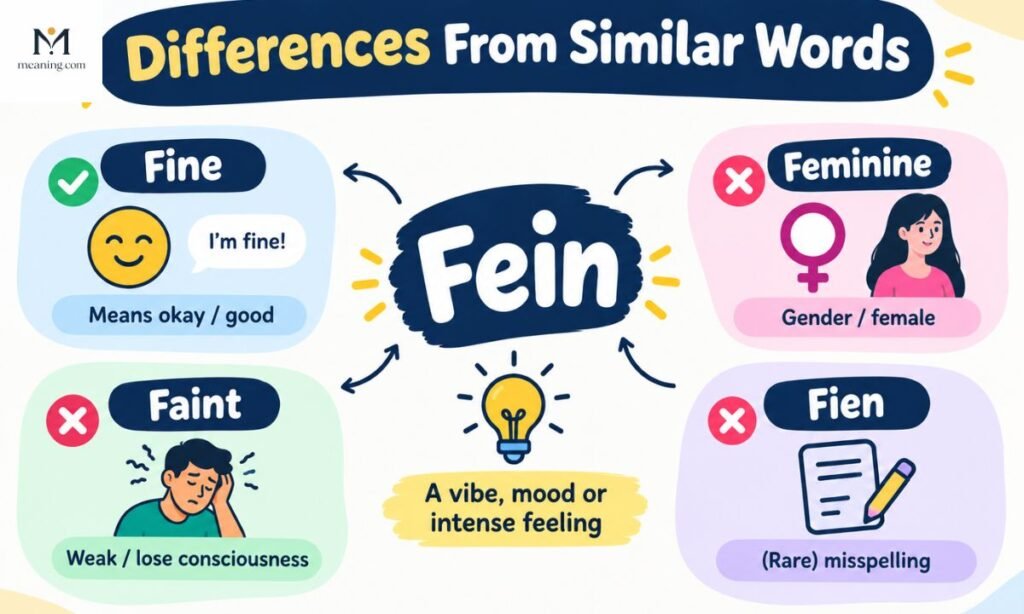
The main distinctions to keep straight: “fein” (slang) = craving/obsession, usually exaggerated; “fiend” = the older, more serious root word, often tied to addiction; “feign” = to pretend or fake something; “fine” (German “fein”) = of good quality, delicate, or refined. Mixing these up is an easy but common mistake, especially since they’re pronounced similarly.
Relevance in Online Conversations & Dating Apps
On dating apps and in flirty texting, “fein” is sometimes used to express strong interest in a person — “I’m feinin’ for you” functions as an exaggerated, half-joking way to say someone is on your mind a lot. It fits the same self-aware, slightly over-the-top tone that defines most of the word’s internet usage.
Popularity & Trends Over Time
“Fein” has existed as internet slang for a while, but usage spiked around the release of the Travis Scott and Playboi Carti song “FE!N” in 2024, which pushed the word back into search trends and social captions. Since then, it’s continued to circulate on TikTok and other platforms as a flexible, meme-friendly way to express craving or obsession.
Frequently Asked Questions
What does fein mean in slang?
It’s a playful respelling of “fiend,” used to describe craving or being obsessed with something, often in an exaggerated, humorous way.
What is a fein for drugs?
In this more literal sense, it describes someone with a strong urge or dependency related to substance use — closer to the original meaning of “fiend.”
What does fein mean in a song?
Most recently, it references “FE!N,” the 2024 Travis Scott and Playboi Carti track, where the title plays on the craving/obsession sense of the word.
What is fein in Gen Z?
Among Gen Z, it’s shorthand for an intense (often joking) craving for food, a trend, a celebrity, or anything else someone can’t stop thinking about.
Conclusion
“Fein” is one of those words whose meaning shifts entirely based on where you encounter it. Online, it’s almost always slang for craving or obsession, rooted in “fiend” and popularized through social media and music. In German, it simply means fine or refined. And sometimes, it’s just a typo for “fine” or “feign.” Knowing the context — the platform, the tone, and the words around it — is the fastest way to tell which “fein” you’re dealing with.

Ethan Brooks is a content creator and SEO professional with 5 years of experience in search engine optimization, content writing, and website growth. I’m passionate about creating helpful, easy-to-understand content that provides real value to readers and performs well in search engines.