

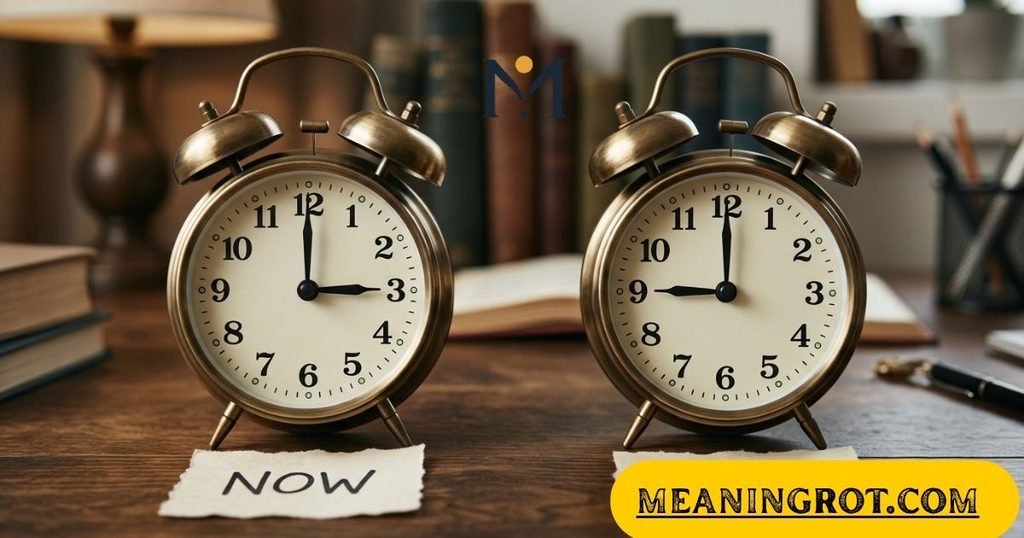
Need to know what the clock showed 6 hours ago? The answer takes one simple step. Take your current time and move back six hours on the clock. If it is 3:00 PM now, it was 9:00 AM six hours ago.
This guide shows you the fast method, a quick chart, and how to handle midnight, time zones, and daylight saving time. You can use it for work logs, travel, medicine schedules, or plain curiosity.
Quick Answer: What Time Was It 6 Hours Ago?
Subtract 6 from the current hour. Keep the minutes the same.
| Current Time | Time 6 Hours Ago |
| 3:00 PM | 9:00 AM |
| 9:30 PM | 3:30 PM |
| 1:15 PM | 7:15 AM |
| 5:45 AM | 11:45 PM (previous day) |
If the result goes below 1:00 on a 12 hour clock, add 12 and switch AM to PM or PM to AM. This is the part most people get wrong.
How to Calculate the Time 6 Hours Ago
There are three easy ways. Pick the one that feels natural to you.
Method 1: The 12 Hour Clock (AM and PM)
- Write down your current time.
- Subtract 6 from the hour.
- If the answer is 1 or higher, you are done. Keep AM or PM the same unless you cross noon.
- If the answer is 0 or less, add 12 and flip AM or PM.
Example: It is 4:20 AM. Four minus six gives negative two. Add 12 and you get 10. Flip AM to PM. The answer is 10:20 PM of the previous day.
Method 2: The 24 Hour Clock (Military Time)
The 24 hour clock is the easiest for math. Subtract 6 from the hour. If the number drops below 0, add 24.
- 15:00 minus 6 hours equals 09:00
- 04:00 minus 6 hours equals 22:00 (previous day)
- 18:30 minus 6 hours equals 12:30
This method skips AM and PM completely, so mistakes are rare.
Method 3: The Analog Clock Trick
Look at the hour hand on a round clock. Count six steps backward. Six hours is exactly half of the clock face. So you can also look at the number directly across from the hour hand. If the hour hand points to 3, the opposite number is 9. That gives you the time six hours back, though you must still check whether it was AM or PM.
6 Hours Ago Chart (Easy Reference)
Save this table for fast checks.
| Current Time | 6 Hours Ago | Day |
| 12:00 AM | 6:00 PM | Previous day |
| 2:00 AM | 8:00 PM | Previous day |
| 4:00 AM | 10:00 PM | Previous day |
| 6:00 AM | 12:00 AM | Same day |
| 8:00 AM | 2:00 AM | Same day |
| 10:00 AM | 4:00 AM | Same day |
| 12:00 PM | 6:00 AM | Same day |
| 2:00 PM | 8:00 AM | Same day |
| 4:00 PM | 10:00 AM | Same day |
| 6:00 PM | 12:00 PM | Same day |
| 8:00 PM | 2:00 PM | Same day |
| 10:00 PM | 4:00 PM | Same day |
What Happens When You Cross Midnight?
Going back six hours from early morning moves you into the previous date. This matters for logs, reports, and timestamps.
Take 2:00 AM on October 14. Six hours earlier is 8:00 PM on October 13. The date changes, not just the hour.
Quick rule:
- Current time is before 6:00 AM: the answer is on the previous day.
- Current time is 6:00 AM or later: the answer is on the same day.
Always write the date next to the time when you record events. It avoids confusion later.
Time Zones and the 6 Hours Ago Question
The six hour gap stays the same everywhere. What changes is the local time you start with. So always begin with the current time in the place you care about.
Here is how one moment looks in different cities when it is 12:00 PM UTC (standard time).
| City | Local Time Now | 6 Hours Ago |
| London | 12:00 PM | 6:00 AM |
| New York | 7:00 AM | 1:00 AM |
| Dubai | 4:00 PM | 10:00 AM |
| Delhi | 5:30 PM | 11:30 AM |
| Tokyo | 9:00 PM | 3:00 PM |
Do not mix two time zones in one calculation. First find the local time, then subtract six hours. This is the safest path for remote teams, flight plans, and international calls.
Daylight Saving Time: Updated Info for 2026
Daylight saving time can shift the answer by one hour if the clocks changed during the last six hours.
Here are the key 2026 dates:
- Europe: clocks go back on Sunday, October 25, 2026.
- United States and Canada: clocks go back on Sunday, November 1, 2026.
Example: In the US on November 1, the clock moves from 2:00 AM back to 1:00 AM. If you check at 5:00 AM that day, the real passed time is six hours, but the clock only shows five hours of difference between 11:00 PM and 5:00 AM… in other words, the extra hour repeats. Your wall clock answer and the actual elapsed time will not match.
For a normal day without a clock change, simple subtraction works fine. On the day of a change, use a time zone converter or a phone clock to be safe.
Easy Tools to Find the Time 6 Hours Ago
You do not need to calculate by hand every time. Try these options:
- Phone clock app: Add the city, then check the earlier time by sliding the clock.
- Online hours ago calculator: Type your time and get the answer in a second.
- Spreadsheet: In Excel or Google Sheets, use a formula like current time minus 6/24.
- Computer command: On Linux or Mac terminals, a date command with “6 hours ago” returns the exact result.
- Smart assistant: Ask your voice assistant to name the time six hours back.
Where People Use “6 Hours Ago” in Real Life
The question looks small, but it shows up in many places.
Work and Shift Logs
Managers check what happened six hours ago to track shift handovers, billable hours, and task progress.
Health and Medicine
Doctors and nurses record when a dose, meal, or symptom started. Knowing the exact time six hours back helps with safe medication timing. Always follow the schedule given by your doctor.
Tech and Security
IT teams search server logs from the last six hours when they track errors or strange activity. A clear time window saves hours of guesswork.
Travel and Remote Teams
Travelers use it to work out sleep schedules and jet lag. Remote teams use it to find out whether a colleague started work yet.
Photography and Nature
Photographers track the sun. Knowing the light six hours ago helps them guess where the golden hour will land.
Common Mistakes to Avoid
Small errors can create big confusion. Watch out for these:
- Forgetting to flip AM and PM after going below 1:00.
- Ignoring the date when you cross midnight.
- Using the wrong time zone as your starting point.
- Skipping daylight saving changes on clock change days.
- Mixing 12 hour and 24 hour formats in the same sum.
A good habit is to say the answer out loud with the day, like “10:20 PM yesterday.” It catches most errors.
Profile Summary Table
| Topic | Key Details |
| Main question | What time was it 6 hours ago? |
| Core method | Subtract 6 from the current hour |
| 12 hour rule | If below 1, add 12 and flip AM or PM |
| 24 hour rule | If below 0, add 24 |
| Midnight rule | Before 6:00 AM, the answer is the previous day |
| Time zone tip | Find local time first, then subtract |
| DST dates 2026 | Europe October 25, US and Canada November 1 |
| Best tools | Phone clock, hours ago calculator, spreadsheet |
| Common error | Forgetting the date change |
| Skill level | Beginner friendly |
Frequently Asked Questions
How do I find the time 6 hours ago quickly?
Subtract 6 from the current hour and keep the minutes the same. If you go below 1 on a 12 hour clock, add 12 and flip AM or PM.
What time was it 6 hours ago if it is 12:00 PM now?
It was 6:00 AM on the same day. Noon minus six hours lands in the early morning.
Does the answer change by time zone?
The six hour gap never changes, but the starting time does. Always use the local time of the place you care about.
What if I cross midnight when going back 6 hours?
The answer moves to the previous date. For example, 2:00 AM today becomes 8:00 PM yesterday.
Does daylight saving time affect the time 6 hours ago?
Yes, on clock change days the result can be off by one hour. Check a time zone converter on those days for an exact answer.
Conclusion
Finding the time 6 hours ago is simple once you know the rule. Subtract six from the hour, watch the AM and PM switch, and check the date if you pass midnight. Use the 24 hour clock when you want fewer mistakes.
Keep the chart handy for quick answers, and remember the time zone and daylight saving tips for tricky days. With these steps, you can name the exact time six hours back in a few seconds, every time.

Ethan Brooks is a content creator and SEO professional with 5 years of experience in search engine optimization, content writing, and website growth. I’m passionate about creating helpful, easy-to-understand content that provides real value to readers and performs well in search engines.
3 thoughts on “What Time Was It 6 Hours Ago? Find the Exact Time”