


Scrolling through a group chat and suddenly someone drops “jsp” at the end of a sentence? You are not alone if you paused for a second. This little abbreviation shows up everywhere, from WhatsApp threads to Instagram comments, and once you know what it means, you will start noticing it everywhere. This guide breaks down the real meaning of JSP, where it came from, how it is used across different apps, and how to reply when someone sends it to you.
What Does JSP Mean in Text & Chat?
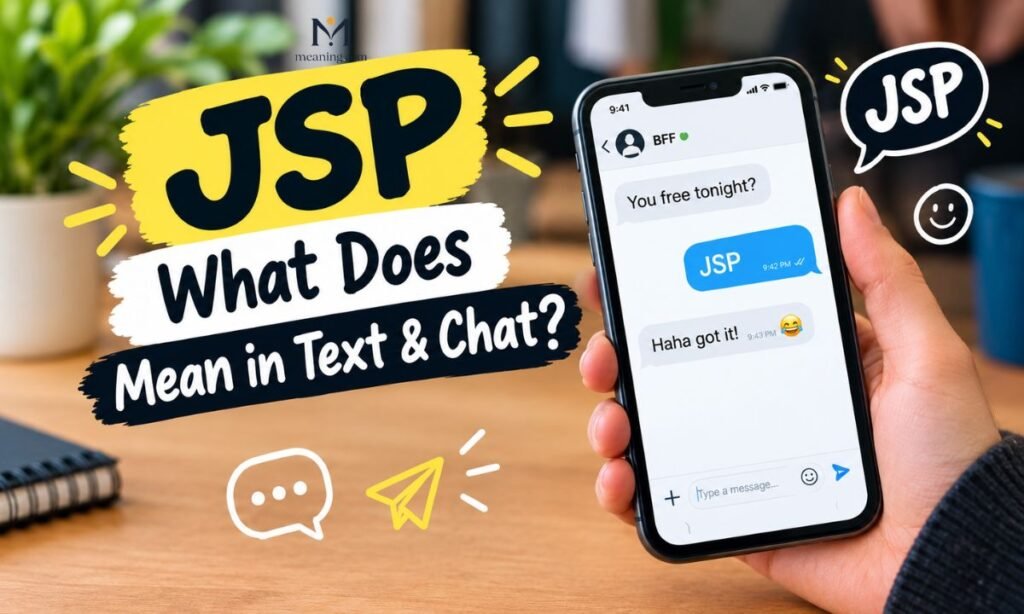
Short Meaning of JSP
In everyday texting, JSP stands for “just saying.” It is a casual tag people add to a message to soften an opinion or comment, making it feel lighter and less like a direct confrontation.
Simple Explanation
Think of JSP as a verbal shrug. When someone shares a thought and does not want it to sound too harsh or final, they tack on “jsp” at the end. It basically tells the other person: this is just my take, no pressure, no offense intended.
People use it after opinions, mild complaints, or observations that could otherwise come across as blunt. The abbreviation takes the edge off without changing what was actually said.
Quick Chat Examples
- “Your playlist is kind of repetitive, jsp.”
- “I think we should leave earlier next time, jsp.”
- “That restaurant was overrated tbh, jsp.”
In each example, the sender is stating an honest opinion but signaling that it is casual and not meant to start an argument.
Full Form, Stands For & Short Meaning of JSP
Breakdown of the Words
| Letter | Stands For |
| J | Just |
| S | Saying |
| P | (part of “Saying,” commonly written as one phrase “Just Saying”) |
Most sources agree the phrase behind the abbreviation is simply “just saying,” written and typed quickly as three letters instead of two full words. Some casual variations online expand it playfully, but the accepted texting meaning stays consistent across platforms.
Why People Use JSP
- It shortens typing time during fast conversations.
- It softens blunt opinions so they don’t sound aggressive.
- It signals the sender is being casual, not confrontational.
- It fits naturally into informal texting culture where abbreviations are the norm.
- It keeps the tone light, especially in group chats or banter with friends.
Short Meaning Recap
If you only remember one thing from this section, remember this: JSP = “just saying,” used to soften an opinion or comment in a casual, non-confrontational way.
Origin, History & First Known Use of JSP
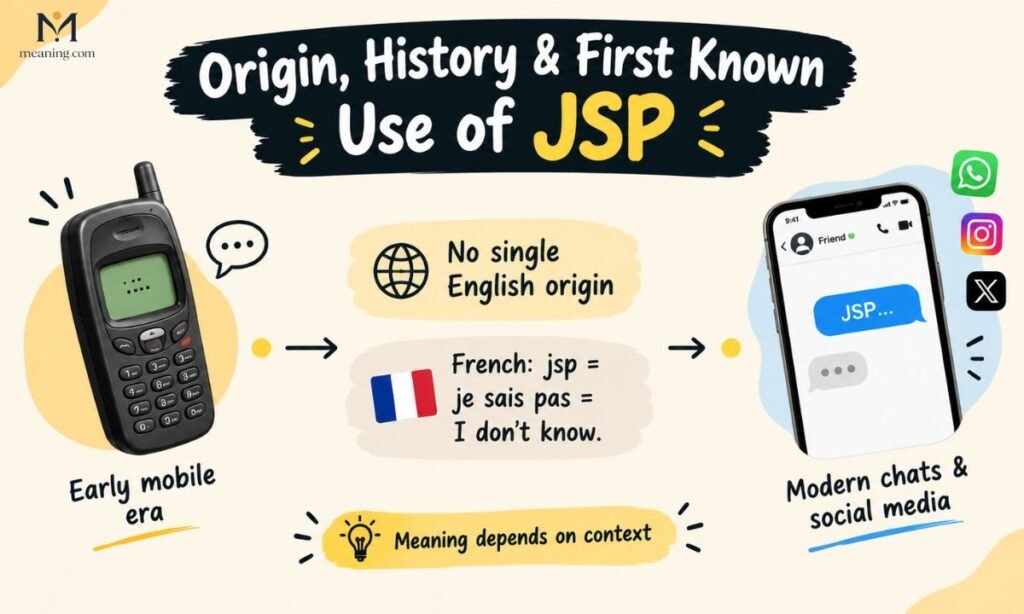
Text abbreviations like JSP grew out of the early days of instant messaging and internet forums, when character limits and typing speed mattered a lot. As chatrooms, SMS, and later smartphone messaging apps became part of daily life, users leaned on shorthand to communicate faster while keeping the emotional tone of a message intact.
“Just saying” itself has been a common spoken phrase for decades, used to add a disclaimer after an opinion. As texting culture matured, it was only natural for people to compress it into an abbreviation that could be typed in a split second.
Where It Became Popular
JSP gained traction primarily through:
- Text messaging (SMS) in the 2000s and 2010s
- Online forums and comment sections
- Group chats on messaging apps
- Social media captions and comments
It never had one single “inventor” or exact date of creation. Instead, it developed organically as digital communication became faster and more casual, much like other common abbreviations such as “lol,” “brb,” or “idk.”
How People Use JSP in Daily Conversations
Common Uses
JSP typically appears in these situations:
- Ending a mildly critical comment
- Sharing an unpopular opinion
- Making a lighthearted observation
- Softening advice or a suggestion
- Adding a playful tone to teasing
Real-Life Examples
- Friend group planning a trip: “We always end up late because of you, jsp.”
- Reacting to a movie: “The ending felt rushed, jsp.”
- Commenting on someone’s outfit choice: “Not really your color, jsp.”
- Giving feedback: “This report could use more detail, jsp.”
In every case, the word “jsp” works like a soft landing pad after a statement that might otherwise feel too direct.
JSP Meaning Across WhatsApp, Instagram, TikTok & Snapchat
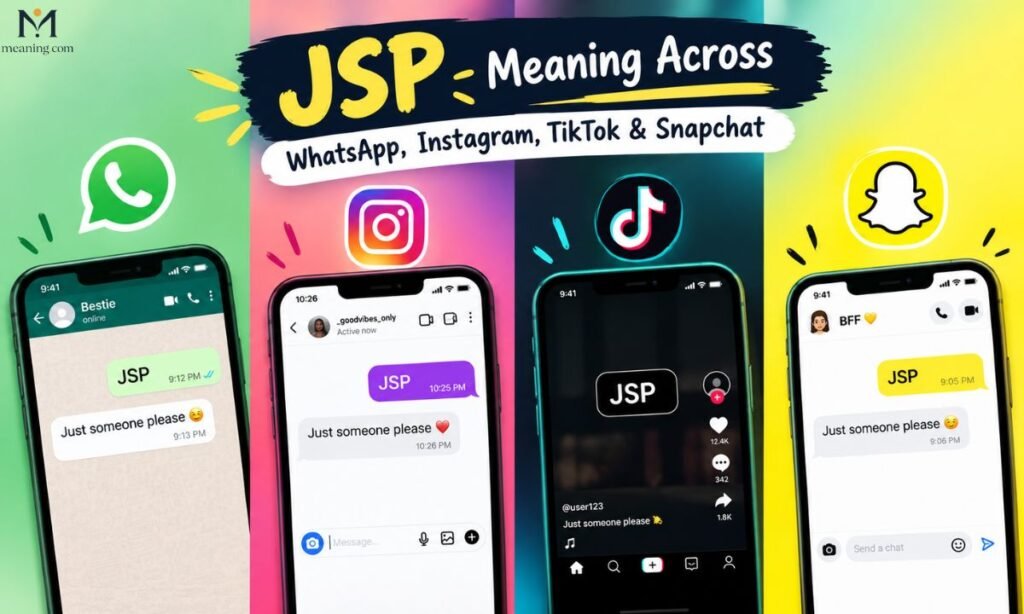
The core meaning of JSP does not change much across platforms, but the way it is used can shift slightly depending on the app’s culture.
On WhatsApp, JSP usually appears in personal or group chats among friends and family. Because WhatsApp conversations tend to be more private and ongoing, JSP often follows honest opinions about daily life, plans, or mild disagreements.
On Instagram, JSP frequently shows up in comment sections and direct messages. It is common under posts where someone wants to add a critical or honest remark without sounding like they are starting drama.
TikTok
TikTok comment sections move fast, and JSP fits right into that pace. Users often add it after reacting to a video, especially when giving an opinion about a trend, outfit, or take that might be a little controversial.
Snapchat
On Snapchat, JSP tends to appear in chat replies rather than public posts, since conversations there are more private and casual. It is used the same way as in texting: to soften an opinion shared with a close friend.
Different Meanings of JSP in Other Fields
While “just saying” is the dominant meaning in casual chat, JSP has other definitions depending on the context.
In Technology
In the tech world, JSP most commonly refers to JavaServer Pages, a Java-based technology used to create dynamic web pages. Developers use JSP files to embed Java code within HTML, allowing websites to generate content dynamically on the server side.
Education & In Business
In academic or workplace settings, JSP is far less common as slang. If it appears at all, it is usually written out as a formal acronym specific to an organization, department, or internal project name rather than the casual “just saying” meaning.
In Medical or Technical Contexts
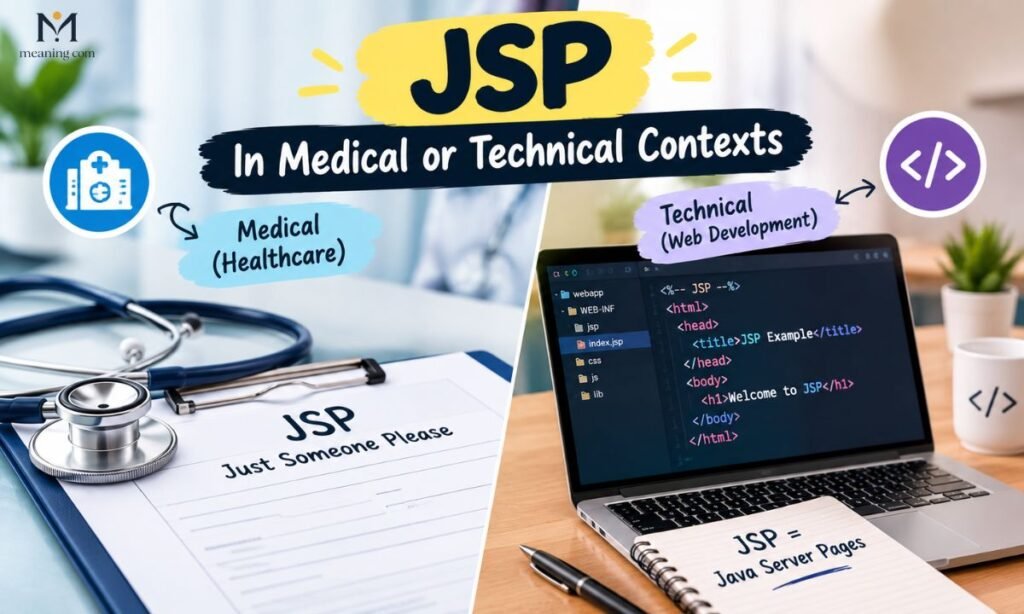
In specialized technical fields such as firearms terminology, JSP stands for “jacketed soft point,” referring to a specific type of bullet with a partially exposed lead tip. This meaning has nothing to do with texting and is limited to that particular industry.
| Context | Meaning of JSP |
| Texting & Social Media | Just Saying |
| Software Development | JavaServer Pages |
| Firearms | Jacketed Soft Point |
| French Texting Slang | “Je ne sais pas” (I don’t know) |
Common Confusions, Mistakes & Wrong Interpretations
Common Mistakes
- Confusing JSP with unrelated technical acronyms because it looks like a random string of letters.
- Misreading JSP as sarcasm or passive-aggressiveness when there is no established rapport with the sender.
- Overusing JSP in every message, which can make the sender sound insincere or repetitive.
- Using JSP in professional or formal conversations, where it can come across as unclear or too casual.
Correct Understanding
JSP is meant to be used sparingly and only in casual settings. It works best among friends or in relaxed group chats, not in workplace emails or formal messages. Context always matters. If the relationship or setting is formal, it is better to skip the abbreviation altogether and simply phrase the opinion politely.
Similar Terms, Alternatives & Related Slang
JSP belongs to a wider family of texting abbreviations that soften or clarify tone. Some related terms include:
- TBH – to be honest
- IMO / IMHO – in my opinion / in my humble opinion
- NGL – not gonna lie
- JK – just kidding
- FR – for real
Interestingly, in French texting slang, “JSP” carries a completely different meaning: it stands for “je ne sais pas,” which translates to “I don’t know.” This shows how the same three letters can mean different things depending on language and region, so context is always the deciding factor.
Examples of JSP in Real Chat Situations
- Group chat planning: “Honestly I don’t love that idea, jsp.”
- Reacting to news: “That decision seems rushed, jsp.”
- Casual banter: “You always order the same thing, jsp.”
- Giving light criticism: “The vocals were a bit off in that cover, jsp.”
Each example keeps the tone friendly while still expressing a genuine thought.
How to Reply When Someone Says JSP
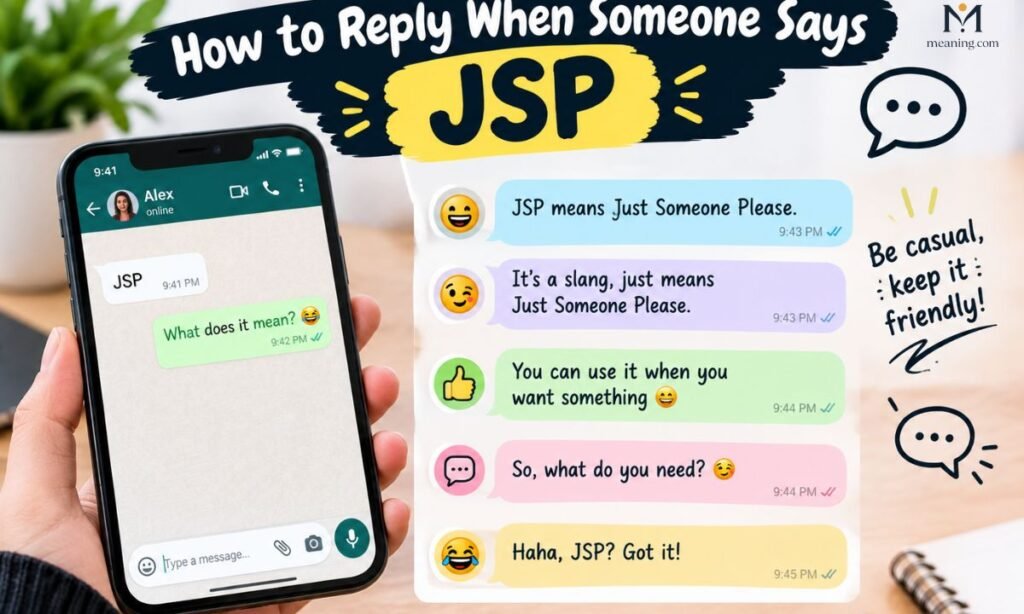
When someone ends a message with JSP, they are usually inviting a relaxed response rather than a defensive one. The best replies keep the same casual energy.
Good Reply Options
- “Haha fair enough.”
- “Lol okay, noted.”
- “True, I see your point.”
- “That’s valid, jsp too lol.”
- “No worries, appreciate the honesty.”
Responding calmly shows that the conversation stays light, which is exactly the tone JSP is meant to create in the first place.
Is JSP Still Popular? Trends & Online Usage
JSP remains a steady part of casual texting vocabulary, especially among younger users who grew up with fast-paced digital communication. While newer slang terms come and go quickly, simple, functional abbreviations like JSP tend to stick around because they serve a clear purpose: softening tone without changing meaning.
It continues to appear regularly across messaging apps and comment sections, and there is no strong sign of it fading from everyday chat culture anytime soon.
Frequently Asked Questions
What is JSP used for?
JSP is used in texting to soften an opinion or comment, signaling that the sender is casually sharing a thought rather than starting an argument.
What is JSP in Snapchat?
On Snapchat, JSP carries the same “just saying” meaning as in regular texting, typically used in private chat replies between friends.
What does the acronym JSP stand for?
In casual chat, JSP stands for “just saying.” In other fields, it can mean JavaServer Pages or jacketed soft point, depending on context.
What is JSP vs HTML?
JSP (JavaServer Pages) is a Java technology used to generate dynamic web content, while HTML is a static markup language used to structure web pages. JSP files often embed Java code within HTML to create dynamic output.
Conclusion
JSP is one of those small texting abbreviations that carries a lot of tone in just three letters. In everyday chat, it means “just saying,” a friendly way to share an opinion without sounding too forceful. Outside of texting, the same three letters can mean something entirely different, from JavaServer Pages in tech to jacketed soft point in firearms terminology.
Knowing the context is key to understanding which meaning applies. Next time JSP shows up in your messages, you will know exactly what it means and how to reply with the same casual, easygoing tone.

Ethan Brooks is a content creator and SEO professional with 5 years of experience in search engine optimization, content writing, and website growth. I’m passionate about creating helpful, easy-to-understand content that provides real value to readers and performs well in search engines.