

If someone texted you “DW” after you apologized, canceled plans, or mentioned a small mistake, you have probably already guessed what it means, even if you were not completely sure. This tiny abbreviation shows up constantly across Snapchat, WhatsApp, Instagram, and everyday texting, and it almost always carries the same reassuring tone.
This guide breaks down exactly what DW means, how it shifts slightly depending on who sends it, and how to reply naturally the next time it lands in your messages.
What Does DW Mean in Text?
DW stands for “Don’t Worry.” It is a short, casual way of telling someone that a mistake, delay, or small problem is not a big deal. People use it to comfort a friend, ease tension, or simply keep a conversation light.
Because typing “don’t worry” takes a bit more effort, DW became a natural shorthand once texting and instant messaging took off. It fits perfectly into fast paced conversations where reassurance needs to come quickly.
The Most Common Meanings of DW
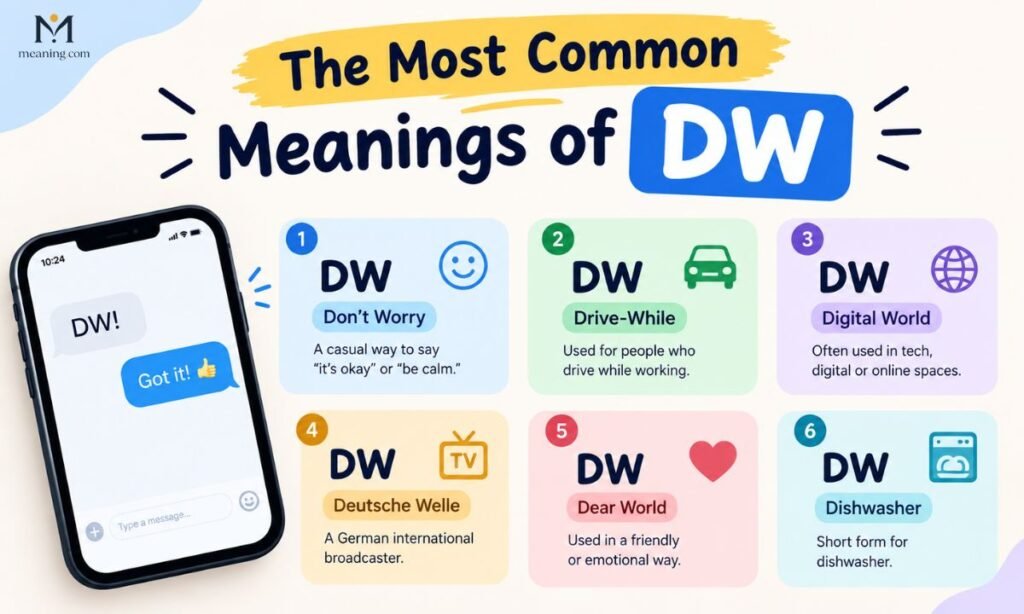
While “Don’t Worry” is by far the most common meaning, DW can occasionally stand for a few other things depending on context:
- Don’t Worry: The overwhelmingly common meaning in texting and social media
- Doctor Who: Used specifically in fandom or TV related conversations
- Dear Wife: Occasionally used in forums or older messaging communities
| Meaning | Context Where It Appears |
| Don’t Worry | Everyday texting, Snapchat, WhatsApp, Instagram |
| Doctor Who | TV show forums, fan communities |
| Dear Wife | Older forum posts, family related chats |
Unless the surrounding conversation clearly relates to a TV show or a specific family reference, DW almost always means “Don’t Worry.”
What Does DW Mean From a Girl
When a girl sends DW in a text, it generally carries the same core meaning as it would from anyone else: reassurance. However, the tone can shift slightly depending on the relationship and situation:
- In friendly conversations, DW usually means she is genuinely brushing off a small issue.
- In a flirty or early dating context, DW can also serve as a way to keep things light without adding pressure to the conversation.
- If she sends DW after you apologize, it typically means she is not upset and wants to move past it quickly.
What Does DW Mean in Text From a Guy
From a guy, DW often signals a relaxed, easygoing tone. It can also serve a few specific purposes:
- Brushing off a mistake without making it a bigger deal
- Avoiding a longer or more emotional conversation, especially early in a friendship or relationship
- Keeping communication casual, particularly in fast, back and forth texting
In most cases, DW from a guy simply means he is not bothered by whatever just happened and wants to keep things easy.
How DW Is Used in Real Conversations
DW appears constantly across everyday texting scenarios. Here are a few realistic examples:
- “Sorry I’m running late.” “DW, take your time.”
- “I forgot to reply earlier.” “DW, I was busy too.”
- “I think I sent that to the wrong group chat.” “DW, happens all the time.”
- “I can’t make it tonight.” “DW, we’ll hang out another day.”
In each case, DW works as a quick, friendly way to remove pressure from the conversation.
Is DW Rude, Flirty, or Offensive?
DW is not rude or offensive in the vast majority of situations. It is generally seen as a warm, reassuring phrase rather than a dismissive one.
That said, tone can shift slightly based on context:
- Reassuring (most common): “DW, it’s totally fine.”
- Slightly dismissive: If sent very briefly during a serious conversation, it can come across as brushing someone off.
- Flirty: In casual dating conversations, DW can soften tension and keep things playful.
If DW feels oddly short or abrupt during an important conversation, it may be worth asking for a bit more clarity rather than assuming the tone.
How to Respond When Someone Says DW
Replying to DW is usually simple, since it rarely requires a detailed response. A few natural options include:
- “Okay, thanks!”
- “Appreciate that.”
- “Cool, no worries then.”
- Continuing the conversation naturally without dwelling on the original issue
If the situation genuinely needs more discussion despite the DW, it is completely fine to follow up with something like, “Are you sure? I don’t want it to be a problem.”
DW Meaning in WhatsApp
On WhatsApp, DW keeps its standard meaning of “Don’t Worry” and fits naturally into personal, everyday conversations. Since WhatsApp is widely used for both casual chats and slightly more organized conversations, such as family group chats or planning messages, DW often appears when someone wants to quickly ease a minor concern.
Typical WhatsApp examples include:
- “Sorry for the late reply, been busy all day.” “DW, no rush at all.”
- “I might be a few minutes late to the call.” “DW, we’ll wait.”
What Does DW Mean Snapchat
On Snapchat, DW is extremely common due to the platform’s fast, casual messaging style. Since Snapchat conversations often involve quick back and forth chats and disappearing messages, short reassurances like DW fit naturally into the flow.
Typical Snapchat usage includes:
- Replying to a missed Snap with “DW, I’ll catch up later”
- Brushing off a small mistake with “DW, it’s fine lol”
- Using it in captions or story replies to keep things casual
Common Misunderstandings About DW
A few misconceptions tend to come up around DW:
- Assuming DW is dismissive. In most contexts, it is meant to comfort, not dismiss.
- Assuming it always means the same level of reassurance. Tone and punctuation can shift how sincere it feels.
- Confusing it with unrelated meanings, such as “Doctor Who,” without checking context.
- Using it in serious or emotional conversations where a fuller response would feel more genuine.
Similar Slang Terms You Should Know
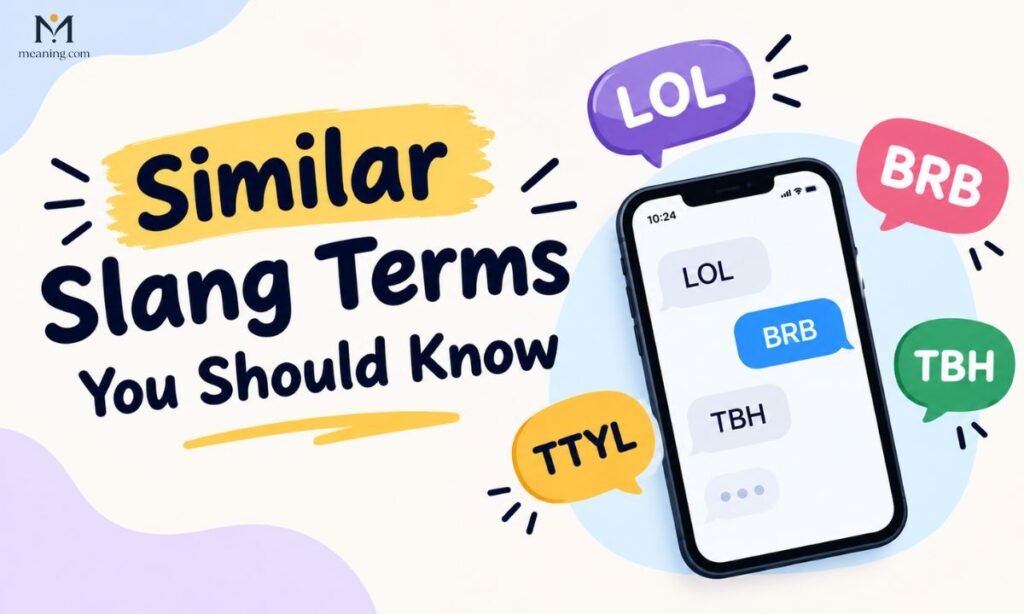
DW often appears alongside other short, reassuring abbreviations, including:
- NW: No Worries, carrying a nearly identical meaning
- IDK: I Don’t Know, used to express uncertainty
- NP: No Problem, used similarly to DW in casual replies
- ITS OK: A slightly longer but equally casual reassurance
When You Should Avoid Using DW
While DW works well in casual settings, there are situations where it is better to avoid it:
- Professional or workplace communication, where writing “don’t worry” in full feels more appropriate
- Serious or emotional conversations, where a short abbreviation might feel dismissive
- Messages to elders or more formal contacts, who may not be familiar with texting shorthand
- Situations requiring clear reassurance, where a fuller explanation would help more than a quick abbreviation
Frequently Asked Questions
What does DW mean in text?
It stands for “Don’t Worry” and is used to reassure someone casually.
Is DW rude?
No, it is generally friendly and reassuring, though tone can vary slightly by context.
Can DW mean something other than “Don’t Worry”?
Yes, rarely it can mean “Doctor Who” or “Dear Wife,” depending on context.
Is DW appropriate for professional messages?
No, it is best to write “don’t worry” in full for formal communication.
What does DW mean from a guy?
It usually signals a relaxed, easygoing tone meant to brush off a small issue.
What does DW mean from a girl?
It generally means genuine reassurance, though it can feel flirty in casual dating contexts.
How should I reply to DW?
A simple “thanks” or “okay” works fine, or follow up if you need more clarity.
Is DW common on Snapchat and WhatsApp?
Yes, it is widely used on both platforms to keep conversations casual and reassuring.
Conclusion
DW is a simple, widely used abbreviation that almost always means “Don’t Worry.” Whether it shows up on Snapchat, WhatsApp, Instagram, or in everyday texting, its purpose stays consistent: reassuring someone that a small issue is not worth stressing over.
Understanding how DW shifts slightly in tone, depending on who sends it and the context around it, makes it much easier to read conversations accurately and respond in a way that feels natural.

Ethan Brooks is a content creator and SEO professional with 5 years of experience in search engine optimization, content writing, and website growth. I’m passionate about creating helpful, easy-to-understand content that provides real value to readers and performs well in search engines.