

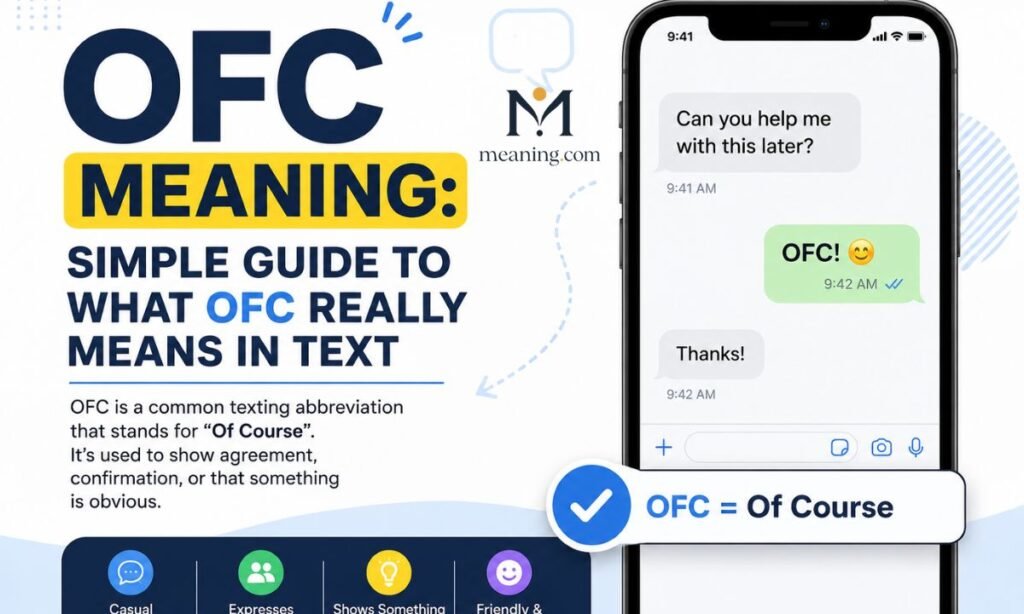
You are scrolling through a group chat and someone replies with just three letters: OFC. No punctuation, no explanation, just OFC. If you are new to texting slang, this can feel confusing for a second.The good news is that OFC is one of the easiest abbreviations to learn, and once you understand it, you will start noticing it everywhere, from WhatsApp to Instagram to gaming chats. This guide breaks down the OFC meaning in plain language, shows you real examples, and explains when to use it (and when to avoid it) so you can text with confidence.
| Term | Meaning | Common Context |
| OFC | Of course | Texting, social media, group chats |
| OFC (alternate) | Original female character | Fanfiction, fandom communities |
| OFC (informal variant) | Of f***ing course | Close friends, casual banter |
What OFC Meaning Is in Everyday Online Conversation
At its core, OFC is a texting shortcut. Instead of typing out “of course,” people type three letters and move on with the conversation. It carries the same tone as saying “yeah, obviously” or “definitely” out loud, but it fits into a fast-paced chat without slowing anyone down.
You will usually see it as a one-word reply to a question, such as:
- “Are you coming tonight?” → “OFC”
- “Can you help me with this?” → “ofc, no problem”
- “Did you finish the assignment?” → “OFC I did”
The meaning stays consistent across most platforms. Whether it shows up on Snapchat, Discord, Instagram DMs, or a regular text message, OFC almost always means a quick and confident yes.
Why People Use OFC Meaning and Short Text Slang

Texting slang exists for one simple reason: speed. People chat far more than they used to, often while multitasking, and typing full sentences on a small keyboard takes time. Abbreviations like OFC solve that problem.
Here are the main reasons people rely on OFC and similar slang:
- Speed – Typing three letters is faster than typing ten.
- Tone – OFC adds a casual, friendly feel that a plain “yes” does not always carry.
- Habit – Once slang becomes common in a friend group, it naturally sticks.
- Belonging – Using the same shorthand as your peers signals that you are part of the same online culture.
- Emphasis – A quick OFC can express confidence or enthusiasm better than a formal reply.
How OFC Meaning Became Popular on the Internet
Abbreviated slang has existed since the earliest days of online chatrooms and instant messaging, where character limits and slow typing speeds pushed people to shorten common phrases. Words like BRB, LOL, and TTYL came from that same era.
OFC followed a similar path. As texting replaced phone calls for casual communication, people looked for faster ways to answer simple yes-or-no questions. “Of course” was a natural target for shortening because it is a common phrase used constantly in daily conversation. Once a few users started typing OFC instead of the full phrase, it spread across messaging apps, social media comment sections, and gaming chats, becoming a standard part of internet vocabulary.
When to Use OFC Meaning in Text Messages
OFC works best in casual, friendly settings. It fits naturally when you want to:
- Confirm plans quickly (“dinner at 7?” → “ofc”)
- Show agreement without over-explaining
- Reply to a friend in a relaxed, upbeat tone
- Keep a fast-moving group chat flowing
It is especially common with friends, siblings, classmates, and casual acquaintances, where a short and breezy reply feels natural rather than dismissive.
When OFC Meaning Might Sound Rude in Conversation

Context matters. While OFC is friendly among peers, it can come across as short, sarcastic, or even dismissive in the wrong setting. A few situations where OFC may not land well:
- Formal or professional messages – Replying “ofc” to a manager or client can look unprofessional.
- Serious conversations – If someone is asking for reassurance or expressing worry, a one-word OFC can feel dismissive instead of supportive.
- New or unfamiliar contacts – Slang with someone you barely know can feel too casual or even a little rude.
- Sensitive topics – When a question deserves a thoughtful answer, a quick OFC may seem like you are not taking it seriously.
A simple rule of thumb: if you would not say “well, obviously” out loud in that moment, skip the OFC too.
OFC Meaning Examples in Real Chats
Here are a few everyday examples showing how OFC fits naturally into conversation:
Example 1 Friend 1: Are you free this weekend? Friend 2: OFC, what’s the plan?
Example 2 Classmate: Can I copy your notes from today? You: ofc, I’ll send them over.
Example 3 Partner: Do you still want to watch the movie tonight? You: Ofc I do!
Example 4 (professional setting to avoid) Manager: Can you finish this report by tomorrow? Employee: OFC ← Better to write “Yes, I’ll have it ready by tomorrow.”
Other common slang words similar to OFC
OFC belongs to a large family of texting abbreviations that all serve the same purpose: saying more with less typing.
| Abbreviation | Meaning |
| OFC | Of course |
| IMO | In my opinion |
| IDK | I don’t know |
| TBH | To be honest |
| SMH | Shaking my head |
| BRB | Be right back |
| IRL | In real life |
| FOMO | Fear of missing out |
| DM | Direct message |
| BFF | Best friends forever |
Learning a handful of these makes it much easier to follow fast-moving group chats without constantly asking “wait, what does that mean?”
How understanding text slang improves communication
Knowing common abbreviations like OFC does more than help you keep up with trends. It makes everyday digital communication smoother and reduces the chance of misreading someone’s tone. A few practical benefits:
- You reply faster and keep conversations flowing naturally.
- You avoid awkward pauses caused by having to look up a term mid-chat.
- You sound more comfortable and current in casual digital spaces.
- You can better judge tone, since slang often carries subtle emotional cues that plain text does not.
For parents, teachers, or anyone chatting with a younger audience, understanding slang like OFC also helps bridge generational communication gaps.
Where people usually encounter OFC online
OFC shows up across nearly every platform where casual texting happens, including:
- Text messages (iMessage, SMS, WhatsApp)
- Social media comments and captions (Instagram, TikTok, X)
- Group chats and messaging apps (Discord, Snapchat, Messenger)
- Gaming chats during multiplayer sessions
- Dating apps, where a quick OFC can signal easy agreement or interest
Because it is so short and versatile, it blends naturally into almost any casual online exchange.
Tips for using OFC naturally in messages
- Match the tone of the conversation. Use OFC with friends, not with your boss.
- Pair it with warmth when needed. “Ofc, happy to help!” reads friendlier than a bare “ofc.”
- Watch your capitalization. Lowercase “ofc” often feels more casual, while “OFC” can read as more emphatic.
- Avoid it in sensitive moments. If someone needs comfort or a thoughtful reply, skip the shortcut.
- Know your audience. Some older or more formal contacts may not recognize the abbreviation at all.
Interesting facts about internet abbreviations

- Many texting abbreviations, including OFC, trace back to early chatroom and pager culture, where short messages were the norm.
- Dictionaries have started documenting popular internet slang as it becomes part of mainstream informal English.
- Abbreviations often develop multiple meanings depending on community, which is why context always matters more than the letters themselves.
- Slang trends move quickly; some terms fade within a year, while others, like OFC, have stayed popular for well over a decade.
- Emoji and abbreviations frequently work together, with a quick “ofc 😊” softening the tone even further.
Helpful resources to learn more about digital language
If you want to keep building your knowledge of texting slang and internet abbreviations, look for:
- Reputable language and dictionary sites that track modern slang usage
- Digital communication guides aimed at parents and educators
- Social media style guides from major platforms
- Online slang dictionaries that update definitions as usage shifts
Staying curious about how language evolves online makes it much easier to keep up with new terms as they appear.
Frequently Asked Questions
What does OFC mean in a text message?
OFC almost always means “of course,” used as a quick way to agree or confirm something.
Is OFC rude to say?
Not usually. It can seem short or dismissive in formal or sensitive situations, but it is friendly among peers.
Does OFC always mean the same thing?
Mostly yes, though in fandom spaces it can stand for “original female character.”
Can I use OFC at work?
It is best to avoid it in formal work messages and use a full “yes” or “of course” instead.
Where did OFC come from?
It grew out of the same texting culture that produced abbreviations like LOL and BRB, driven by the need for speed.
Is OFC only used by younger people?
It started with younger, casual texters, but it is now widely understood across most age groups online.
Conclusion
OFC is a small abbreviation with a simple job: saying “of course” quickly and casually. Once you know the meaning, it becomes easy to spot in texts, comments, and group chats, and just as easy to use yourself. The key is reading the room.
Save OFC for friends and casual conversations, and stick to full, clear replies in formal or sensitive settings. With that balance in mind, you will never have to pause and wonder what OFC means again.

Ethan Brooks is a content creator and SEO professional with 5 years of experience in search engine optimization, content writing, and website growth. I’m passionate about creating helpful, easy-to-understand content that provides real value to readers and performs well in search engines.